Cities Can’t Outsource the Future

American cities are about to run into a wall.
"A transit wall?"
Well, yes, but-
"Oh, a budgetary wall."
I mean yes we are however–
"Oh of course, a housing wall!"
OK, bit that's gotten old, I mean a technical capacity wall in this case.
Look. We have a problem, America. For decades, city governments universally have treated IT like an afterthought: the IT guy has a job with a few basic back office tasks. He fixes the laptops, he keeps email running, he makes sure the permit portal does not collapse, he maintains the websites. And sadly, it is often just one person, and so often it is just one guy. Not exactly the most diverse perspectives, but that's a blog for another time.
These responsibilities were small basic things that didn't need a big team, but that world is long dead since dead and we stand in its successor. A modern city is now a software system with roads, pipes, schools, buses, police radios, payment systems, traffic signals, public records, emergency alerts, housing databases, and cybersecurity obligations attached to it.
The core problem is that most cities and municipalities are still organized as if technology is something they buy and not something they must understand and govern.
When a city buys concrete, it does not need to become a cement company, but it does need civil engineers. It needs inspectors. It needs people who understand load, durability, drainage, failure modes, maintenance schedules, and public safety. Nobody sane would build a bridge entirely through vendor demos and procurement checklists.
Public infrastructure has always employed experts in that domain, and now that public infrastructure very much includes software, it is important that cities treat it that way and ascribe it the priority it has in the everyday lives of the residents of those cities.
This is going to be essential across a broad spectrum of issues, but this is especially obvious with autonomous vehicles.
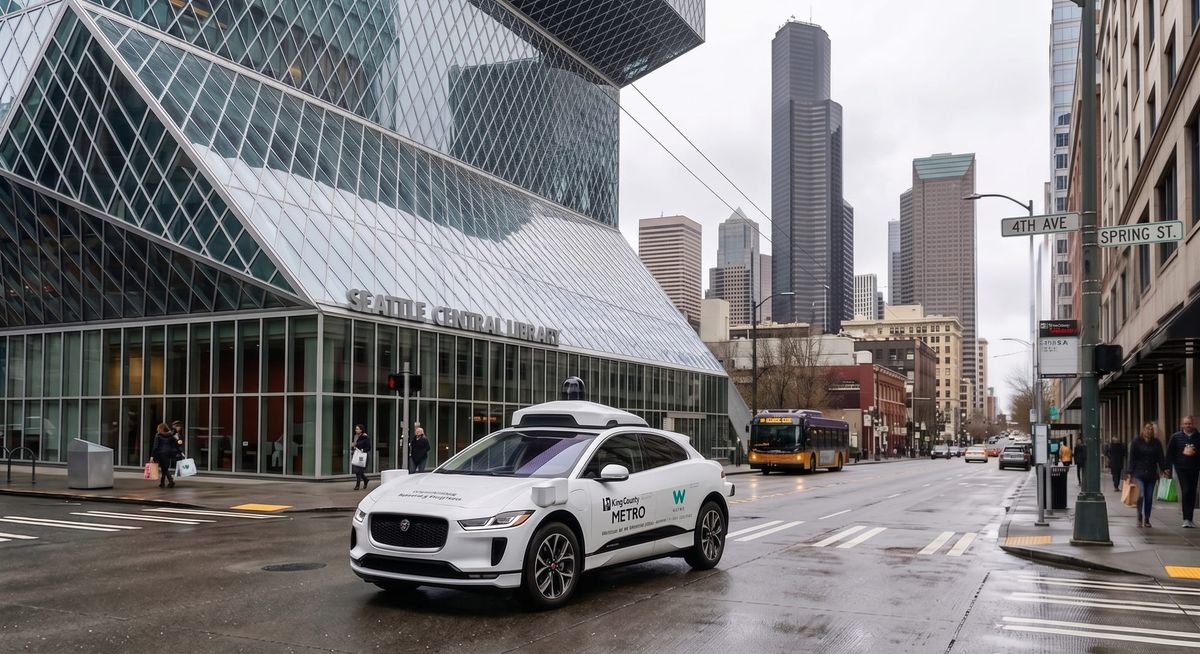
In the year of our Claude 2026, Waymo is far beyond science fiction. Their service is already operating in major U.S. cities, and they reports hundreds of thousands of trips every single week across Phoenix, San Francisco, Los Angeles, and Austin. Autonomous vehicles that are safer than human drivers are not just a hypothetical anymore, they are real and they are here. One of the Waymo nests (as my partner and I affectionately call them) is a ten minute walk from me as I type this. They've been testing now with solely human drivers for a year and a half, which I appreciate. It goes without saying that it is obviously essential to do that due diligence before they roll out to mainstream consumer use in 2027 (or whenever it occurs) and I appreciate Waymo not launching this product in my city and neighborhood before it is ready. As someone with severe driving anxiety, I understand how dangerous driving can be, and I want to make sure it is done right.
But sooner or later, it will launch, and cities will need to ask an obvious question as self driving cars (from Waymo and other parties) start rolling out in more and more cities in the very near future: if autonomous vehicles are going to move people around our streets, why should the default model be privately owned robotaxi networks extracting fares from public roads?
We know there's a better model for this. Cities and transit agencies should be negotiating to acquire autonomous vehicle fleets from Waymo, or from comparable providers as the market matures, and fold them into public transportation. We do this already with manufacturers of trains and buses, we simply are not as used to knowing how to handle the situation when we fold software into the list of variables to consider.
Obviously, compensate Waymo. Go ahead, let them make money! They earned their technical lead, and obviously no serious city can nor should pretend it can recreate fifteen years of autonomous driving research by some of the most brilliant scientists in the field by posting a few municipal software jobs. Instead, a productive relationship can absolutely be arranged. Waymo can provide vehicles, autonomy systems, maintenance support, safety updates, technical documentation, and ongoing engineering services and onboarding, but the public should own the transportation layer and the city and those governing it should have the ability to handle issues that come up, and they should be able to handle them independently of the company.
That means cities should not merely “allow” robotaxis to operate. They should procure fleets, set service obligations, integrate them into fare systems, require accessibility standards, define privacy rules, own operational data where appropriate, and build internal teams capable of auditing, supervising, integrating, and eventually developing more of the software themselves. In plain English: the city and the public should not just be a customer. We need more from our cities in this technological age of autonomous vehicles, we need them to be competent technical owners accountable to the public.
I firmly believe that this does not mean this should replace buses or trains or other means of public transit, because that would be a massive mistake. I ride the Link every week, and I am a huge advocate for public transportation and less cars on the road. High-capacity, frequent, and reliable public transportation is the backbone of any serious urban transportation system and that needs to be the highest priority. But autonomous public fleets serve a role: they could fill the gaps that fixed-route transit struggles with: late-night rides, first-mile and last-mile connections, paratransit, low-density neighborhoods, trips to transit hubs, emergency mobility, and service for people who cannot drive. I want to see a world where public transportation handles the vast bulk of trips, and autonomous robotaxis handle the edge cases (the last mile).
You should have a world where you open your city’s transit app and seeing buses, trains, bike-share, walking routes, and public autonomous shuttles in one single system, with integrated fare, and low-income riders receiving subsidies. Wheelchair-accessible vehicles should be prioritized and wheelchair-bound or otherwise disabled riders who disclose that information should be also be prioritized. The city can send vehicles to underserved neighborhoods instead of only to the most profitable nightlife corridors. During a snowstorm, a heat wave, or a transit disruption (once these systems more reliably navigate these situations as they currently cannot), this fleet can be and should be redirected as part of an emergency operations plan.
The obstacle is that most cities are not staffed for this world. A city that wants to operate autonomous public transportation needs much more than a procurement officer and a vendor manager. It needs software engineers, cybersecurity specialists, data engineers, site reliability engineers, product managers, digital accessibility experts, privacy lawyers who understand technology, simulation and safety analysts, cloud infrastructure people, mapping specialists, and technical program managers who can translate between elected officials, operations staff, and engineering teams.
That sounds expensive, because the truth is that it is. But it is less expensive long term than the unacceptable alternative, which is permanent dependency upon these private corporations that many Americans rightly or wrongly do not trust. The fact is that Waymo's adoption faces the biggest obstacle which is that many people simply do not trust Waymo and do not trust Alphabet, and often don't even believe the extremely positive safety data coming out (which, for the record, I do). Building our internal technical capacity will enable us to earn that trust, as it will be managed by an entity that is more accountable to the public than Alphabet is.
Without this internal technical capacity, our cities will buy black boxes. They will sign contracts they cannot fully evaluate, and will be told that certain service changes are “not on the roadmap.” Indeed, they will have no meaningful way to compare vendors, validate claims, inspect software behavior, or protect residents from surveillance and failure. Cybersecurity researchers and policy groups have continued to point out the obvious for years: state and local governments are under-resourced, full of legacy systems, and increasingly targeted.
The conclusion shouldn't be to “ban the technology.” The conclusion should rather be to “staff the government.” Cities need public-sector technology departments that look less like help desks and more like infrastructure agencies. (I speak locally because this is where we have the most power and leverage, but I obviously strongly believe this should be the case state-wide and nationally as well.)
That means creating serious municipal technology corps: competitive engineering roles, apprenticeship pipelines, partnerships with universities, shared open-source tools between cities, regional cybersecurity teams, and public-interest product management. It means giving city CTOs and CIOs actual authority instead of treating them as internal service providers. It means hiring people who can read an API contract, inspect a data retention policy, run a security review, understand uptime requirements, and tell a vendor no.
We need to approach this problem in four separate phases. For this, I recruited ChatGPT to help flesh out my ideas into a coherent policy. The following four phases are written by Chat.
Phase one: cities negotiate strong operating agreements. Waymo or another provider runs crucial parts of the autonomy stack (while open sourcing large aspects, which is something that will require strong pressure), but the city requires service data, safety reporting, incident transparency, accessibility commitments, cybersecurity requirements, and integration with public transit planning.
Phase two: cities or transit agencies acquire dedicated public fleets. These vehicles operate under public service rules, not just private ride-hailing incentives. The city owns the rider relationship, the fare policy, the service map, and the performance targets.
Phase three: public agencies build their own technical operations layer. Dispatch, payments, identity, subsidies, routing priorities, data governance, rider support, emergency overrides, and service analytics become public capabilities. Vendors still provide specialized autonomy technology, but the city controls the public interface and service logic.
Phase four: cities, states, universities, and federal agencies collaborate on shared public software for mobility. Not every city needs to build everything alone. In fact, they should not. The right model is shared infrastructure: open standards, reusable code, common procurement templates, joint safety requirements, and regional teams that smaller cities can access.
Some form of public ownership of these systems are not unprecedented. Regional transit authorities in places like Chandler, Arizona, have already run multi-year pilots subsidizing Waymo vehicles for paratransit and first-mile/last-mile connections. These experiments show how autonomous fleets are at their most valuable when they are actively managed to fill the structural gaps of fixed-route transit. A city does not need to engineer the neural networks driving the car; it needs to own the dispatch layer that ensures that car serves a low-density neighborhood (which will still remain and exist even if we push for denser housing, as we should). When the local government controls the rider relationship and the operational data, the technology serves a democratic purpose rather than simply extracting a fare.
Private companies are good at building technology, and governments are responsible for legitimacy, equity, continuity, safety, and democratic accountability. A healthy public-private model recognizes both facts. Waymo can get paid, Google and Alphabet can make money. I want a world where vendors can compete. But the public cannot surrender the operating system of the city.
This applies beyond autonomous vehicles. Housing permitting, public benefits, water systems, emergency response, traffic management, energy grids, public health, courts, libraries, and schools are all already software-mediated systems. Cities that do not build in-house technical capacity will not simply be “less innovative", they will be weaker and less efficient and more wasteful governments. They will be unable to enforce their own values because they will not understand the systems carrying them out.
A city that cannot audit an algorithm cannot govern it. A city that cannot secure its systems cannot protect its residents. A city that cannot modify its digital services cannot respond quickly to crises. A city that cannot integrate new mobility tools into public transit will watch private companies build the future on top of public streets, then charge the public to access it.
The street, the curb, and the right of way are all public. The mobility network should serve public goals.
So yes: acquire the Waymos, build the partnership, pay for the technology. But we can not stop there. We should hire the engineers, build the data teams, own the dispatch layer. We should demand interoperability, require transparency, and create public alternatives. I want to make autonomous vehicles part of transit, not just another premium app for people who can afford convenience.
The cities that thrive in the next century will not be the ones that simply buy the newest tools. They will be the ones that know how those tools work, how they fail, who they serve, and how to bend them toward public purpose.
The next great public works project are municipal and local IT departments. We should recognize that, and fund them like one.